Course Details
What This Course is about (mainly)
We will learn about computers in different aspects.
Assessment Details - ECP Section 5
- In-semester theory exam (20%)
- In-semester lab exam (10%)
- Project (20%)
- AVR microcontroller programming
- 10% pass hurdle
- Final Exam (50%)
- 40% pass hurdle
- Invigilated 2-hr written exam on campus
Computers and Binary Numbers
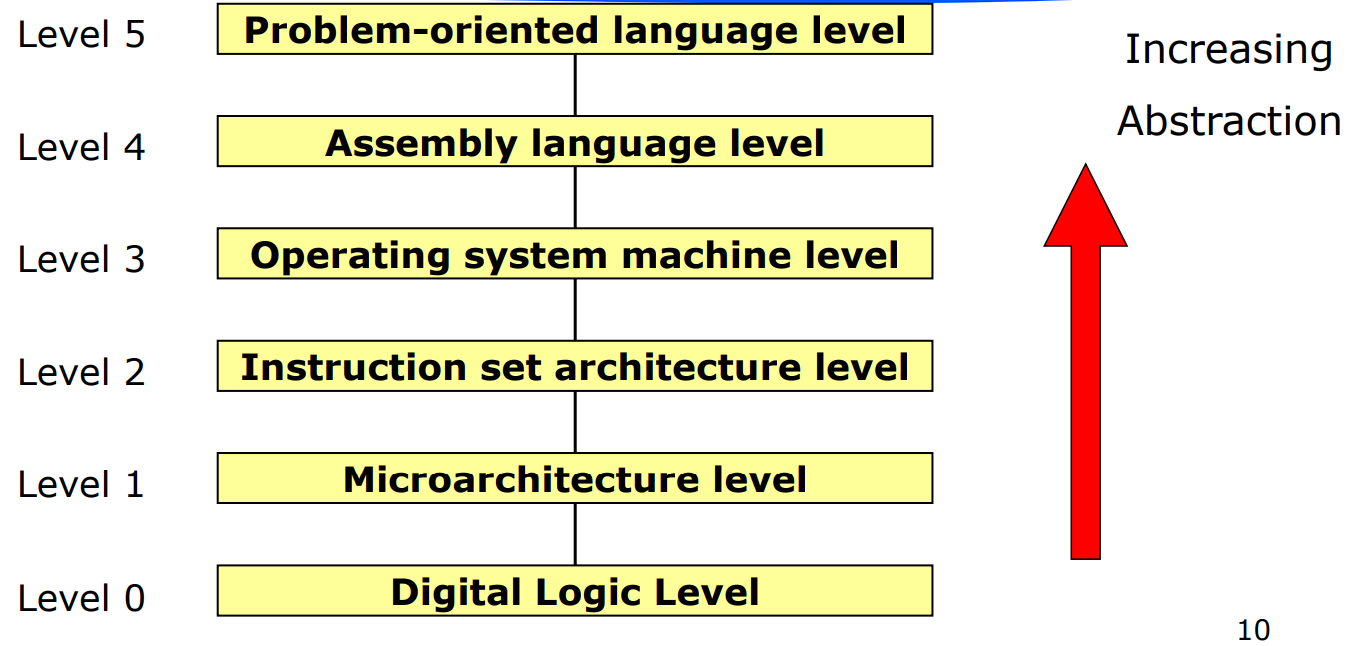
A Computer at Different Levels of Abstraction
In decreasing abstraction:
- Level 5 - Problem-oriented language level
- Level 4 - Assembly language level
- Level 3 - Operating system machine level
- Level 2 - Instruction set architecture level
- Level 1 - Microarchitecture level
- Level 0 - Digital Logic Level
We will mostly cover Level 0, 2, 4 and 5. Level 1 will be covered briefly but Level 3 will be skipped.
Bits, Bytes and Binary Numbers
Computers represent everything in binary. A bit is a binary digit (0 or 1). There are 8 bits in a byte. (e.g. 01010111)
Modern computers deal with words which are usually a power of 2 number of bytes, e.g.
- 1, 2, 4, or 8 bytes = 8, 16, 32, 64 bits
Representing Whole (Unsigned) Numbers in Binary
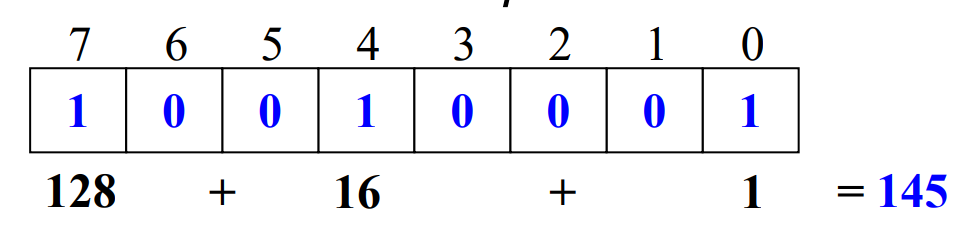
Each bit position has a value:

Converting binary to decimal:
Add values of each position where bit is 1
Least and Most Significant Bits
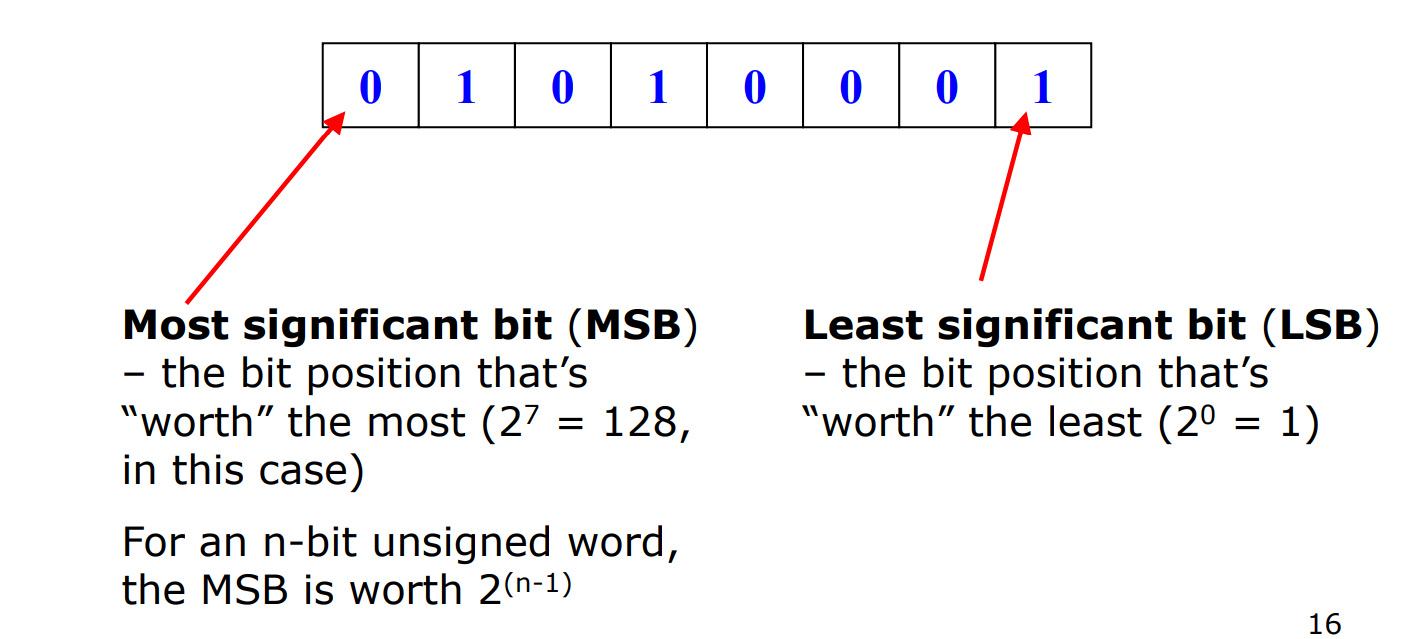
There are two types of Bits:
- Least Significant Bit
- The least significant bit is the position on the far right that is ‘worth’ (in value) the least.
- Most Significant Bit
- The most significant bit is the position on the left that is ‘worth’ (in value) the most.
- For an bit unsigned word, the MSB is worth .
Number Range
Assuming whole unsigned numbers:
- The lowest number possible is 0 (with all 0 on the binary scale)
- The Highest number possible represented on Octal (radix-8), are .
Other Radices
A Radix is a number system base. A radix-k system uses systems to represent digits 0 to . The value of each digit is (from the right)